

The importance of human-centric capabilities in your workforce that AI can’t replace
The importance of human-centric capabilities in your workforce that AI can’t replace Artificial Intelligence (AI) is already part of everyday
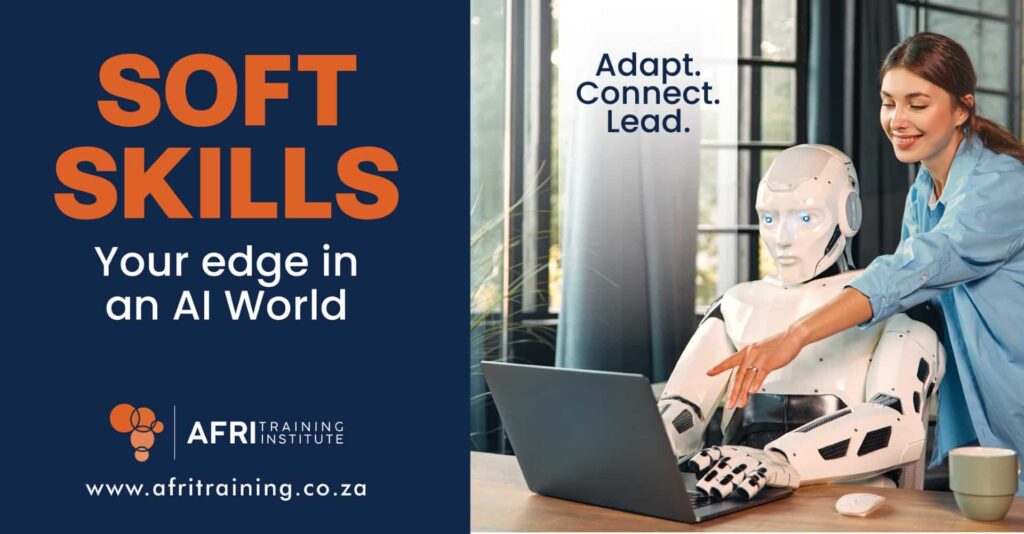
The workplace is changing faster than ever. Technology is rewriting job descriptions, artificial intelligence (AI) is shifting how we deliver services, and global connectivity means we are collaborating with more diverse teams across more locations than at any other time in history. In this context, technical skills alone are no longer enough.
The future of work will be shaped by something far less tangible, yet far more powerful: behavioural intelligence.
As AI takes over more routine and analytical tasks, the skills that will matter most are the ones it cannot replicate, for example, the uniquely human abilities to connect, emote, adapt, and make decisions in complex, unpredictable environments.
Beyond the ‘hard skills’ race
Over the years, I’ve met countless young professionals who tick every technical box on paper yet struggle to thrive in practice. They know the process, but when the unexpected happens, they freeze. They can identify a problem but wait for someone else to solve it. This is not a question of competence but of mindset.
This habit, I’ve noticed, often stems from not being encouraged (either in school or early work experiences) to think through solutions independently or seek out the right people to guide them. Without that coaching, the learned capability to problem-solve cannot be fully reached.
Behavioural intelligence is the ability to read a situation, adapt your approach, and execute effectively, drawing on both emotional and social awareness. It’s the bridge between knowing and doing. Without it, even the most technically capable employee will struggle to reach their potential.
Unfortunately, it’s also an area our education systems neglect. Schools and universities focus on subject knowledge, but rarely teach how to navigate conflict, make decisions under pressure, or adapt to change. Those lessons often arrive, if at all, only once you’re already in the workplace. Yet these soft skills should be considered equally important and carry the same weighting as traditional hard skills.
Why behavioural intelligence matters more than ever
Think about two employees with identical qualifications, doing the same job in the same department. One consistently delivers, inspires trust, and finds ways to work smarter. The other gets stuck, repeats the same mistakes, or causes friction. The difference between them is rarely technical knowledge but rather behavioural intelligence.
As automation takes over routine tasks, the skills that will differentiate high performers are the ones AI cannot replicate: curiosity, adaptability, empathy, ethical judgment, and the ability to collaborate across different teams. Companies that recognise this are already prioritising these capabilities and returning to the foundation of doing the basics well, not just to improve productivity, but to leverage the opportunities soft skills bring and to retain talent and build resilience.
In fact, at Afri Training Institute, we’re seeing a steady rise in tenders and RFQs requesting soft skills programmes. From three-hour sessions on handling difficult conversations to full management development initiatives, organisations are starting to realise that technical excellence without behavioural competence is a performance risk.
Building adaptability into the culture
You cannot ‘train’ behavioural intelligence with a single workshop. It requires continuous reinforcement that includes coaching, feedback, and opportunities to apply new skills in real situations.
In my own teams, we’ve moved away from calling them “performance reviews” and instead hold regular collaboration conversations. These focus not only on what is being achieved, but also on how. Is someone overcomplicating a task? Are they avoiding certain conversations? Are they open to feedback? These discussions help surface behavioural gaps and address them before they impact results.
Sometimes, the gap isn’t about skill at all, but about behaviour. I’ve seen competent recruiters slow down an entire hiring process because they are over-vetting candidates, not trusting their own judgement enough to move forward. Recognising and addressing patterns like this is what turns performance measures into real development opportunities.
For managers, this means shifting from an autocratic approach to a coaching mindset. The leaders of the future will not be the ones who bark instructions; they will be the ones who understand individual strengths, help employees work through obstacles, and inspire them to grow.
The Afri Training Institute approach
At Afri Training Institute, every behavioural skills programme we design is tailored to a specific organisational challenge. We integrate role-play, scenario-based learning, and feedback loops so that the skills being developed connect directly to the work environment. Because behavioural intelligence is context-dependent, training must reflect the realities employees face every day.
We also focus on making these competencies sustainable. That means coaching managers to reinforce soft skills on the job, encouraging peer learning, and embedding these capabilities into performance metrics. What gets measured gets managed, and behavioural intelligence should be no exception.
The competitive edge you can’t automate
AI can process data, but it can’t navigate cultural nuance. It can recognise and flag patterns, but it can’t build trust or exercise ethical judgment that underpins lasting business relationships. In South Africa, where business relationships often precede transactions, that human connection remains a decisive factor in success.
The future belongs to organisations that understand this, those that have the foresight to continue investing in cultivating both the technical expertise and the behavioural intelligence of their people.
The importance of human-centric capabilities in your workforce that AI can’t replace Artificial Intelligence (AI) is already part of everyday

The importance of microlearning and nanolearning in skills development For years, training was something you left your desk for. A

What Gen Z wants from the modern workplace – tips and tricks for retaining the next generation of workers I’m
WhatsApp us